
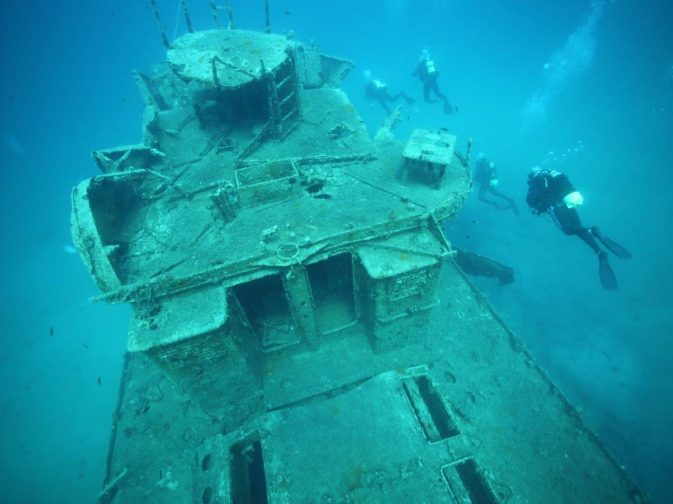
Underwater orienteering is one of the most demanding disciplines in diving. A combination of physical fitness, technical knowledge and mental concentration comes to the fore in each dive, where competitors must find given landmarks using a compass and their own navigational skills. Unlike classic diving, there is no room for improvisation here, but every movement and decision requires a high level of precision.
The competition takes place in such a way that participants, equipped with complete SCUBA equipment, enter the water with the task of finding certain points on the course in the shortest possible time. The total length of the course ranges between 550 and 650 meters, while the time to find all landmarks is limited to approximately 15 minutes and 20 seconds, depending on the discipline. In certain variants, such as the "MONK" discipline, the time limit may be defined differently.
The specificity of this discipline is reflected in the fact that everything takes place underwater, often with reduced visibility. Competitors must rely on a compass, distance estimation and their own sense of space, which makes this discipline extremely demanding.
Underwater orienteering includes several different disciplines that differ in the shape and complexity of the course. Among them are the "Star" course, which requires precise movement between several points arranged in a certain shape, then variant C, which involves coordination between competitors, as well as A1 and similar variants that combine different directions and lengths of movement. A special place is occupied by the 5P discipline, which involves finding clearly defined landmarks in a precisely defined order. The diagrams in the document show the arrangement of the courses and the mutual distances between the points, which further illustrates the complexity of these tasks.
The competition is conducted according to clearly defined rules. The distance between landmarks is 100 to 150 meters, and each competitor tows a buoy to make himself visible from the surface and to enable his movement to be monitored. Going outside the designated course or exceeding the time limit leads to disqualification, further emphasizing the importance of precision and control.
Underwater orienteering is not only a sports discipline, but also a way to develop key skills in divers. It contributes to improving concentration, the ability to navigate in complex conditions and safety in the water. That is why it plays a significant role in the development of diving and encouraging new generations to get involved in this demanding, but extremely valuable activity.
You can download the original documentation here.